General

/General

Forests + People: The vital link between trees and society

Effects of widespread environmental degradation have infiltrated the entire global system, demonstrating the complex interdependency among the public, private, and civil spheres that govern our world. While the environmental consequences of rampant deforestation may be obvious, the social and economic challenges, although sometimes peripheral, are equally enormous. Destruction of forests leads to a cascade of social and economic obstacles, and this fundamental link between forests and people must be emphasized in development efforts. Take for example, the link drawn between deforestation and gender inequality. In the developing world, poor land management leads to overuse and degradation of forests, leading to significant decline in overall tree cover. As the forest diminishes, water sources dry up and the forest edge retreats further from the community. Women and girls, who are primarily responsible for water and fuelwood collection, are then forced to walk further distances to collect the resources needed for their daily survival. As resources become more scare, women’s enrollment in school declines, further perpetuating the cycle of gender disparity. While it may seem that daily survival and forest conservation are competing demands, particularly for forest-edge communities in developing countries, this is not necessarily the case. Advances in reforestation, agroforestry, and sustainable agriculture have shown to simultaneously achieve gains in both smallholder farm productivity and forest cover. Improved strategies on the production and sale of non-timber forest products and high-value crop yields are stimulating activity in rural markets. These multidimensional techniques are helping to reverse deforestation and mitigate climate change while generating employment, increasing food security, and improving social welfare in the local communities. Development programs that are able to achieve environmental, social, and economic benefits through holistic approaches are most likely to be sustainable. Cross-sector partnership [...]

By | January 21st, 2014|General|0 Comments

Meet Ann

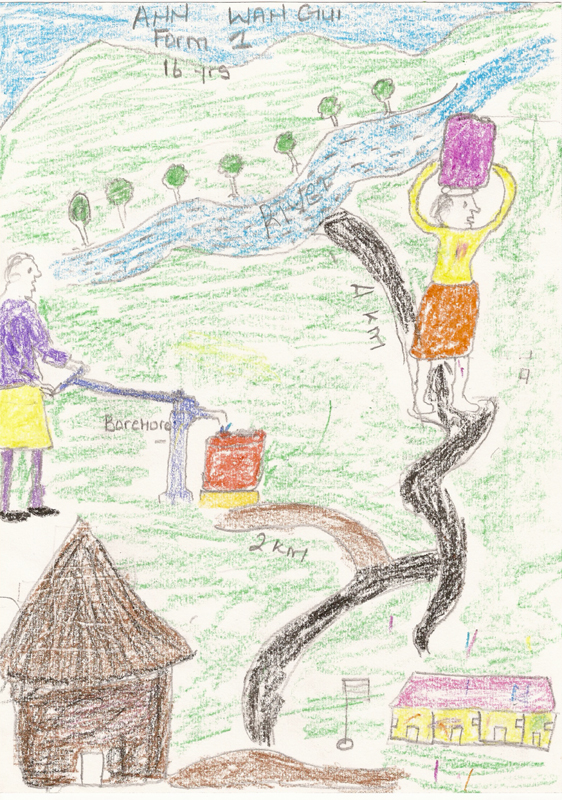
What was the first thing you did when you woke up this morning? Brush your teeth? Shower? Use the toilet? Most likely you were able to perform one or all of these activities from the comfort of your home. In the developed world household taps are ubiquitous; reliable access to safe water is expected. However, this is not a universal reality. Today, nearly one billion people on the planet live without proximate access to safe water. That the world’s water resources are unequally distributed is a well-known fact. But what exactly does this mean? What are the implications for the individuals who live without a tap or toilet? In the development community such issues are often viewed through a macro lens, rendering human faces and individual experiences out of focus. So, let me make this personal. Meet Ann. Several months ago I had the pleasure of meeting Ann while on a research trip to Kenya’s Rift Valley province. Ann, a 16-year-old student at Mwituria Secondary School, is one of the 17 million Kenyans living without a reliable source of safe water. For Ann, the eldest of four siblings, each day begins before dawn to collect water for her family. Since she was a young girl, Ann has made the four-kilometer walk to fill a jerry can at her community’s only water source – a stream. Ann carries the 20-liter can, weighing 40 pounds, atop her head as she navigates the occasional goatherds and morning foot traffic on the four-kilometer walk home. The trip takes Ann two hours. Once home, Ann promptly rinses, dresses and then sets off on the two-kilometer walk to school with her brothers – that is if she had enough water to [...]

By | December 12th, 2013|General|1 Comment

A Milestone Reached

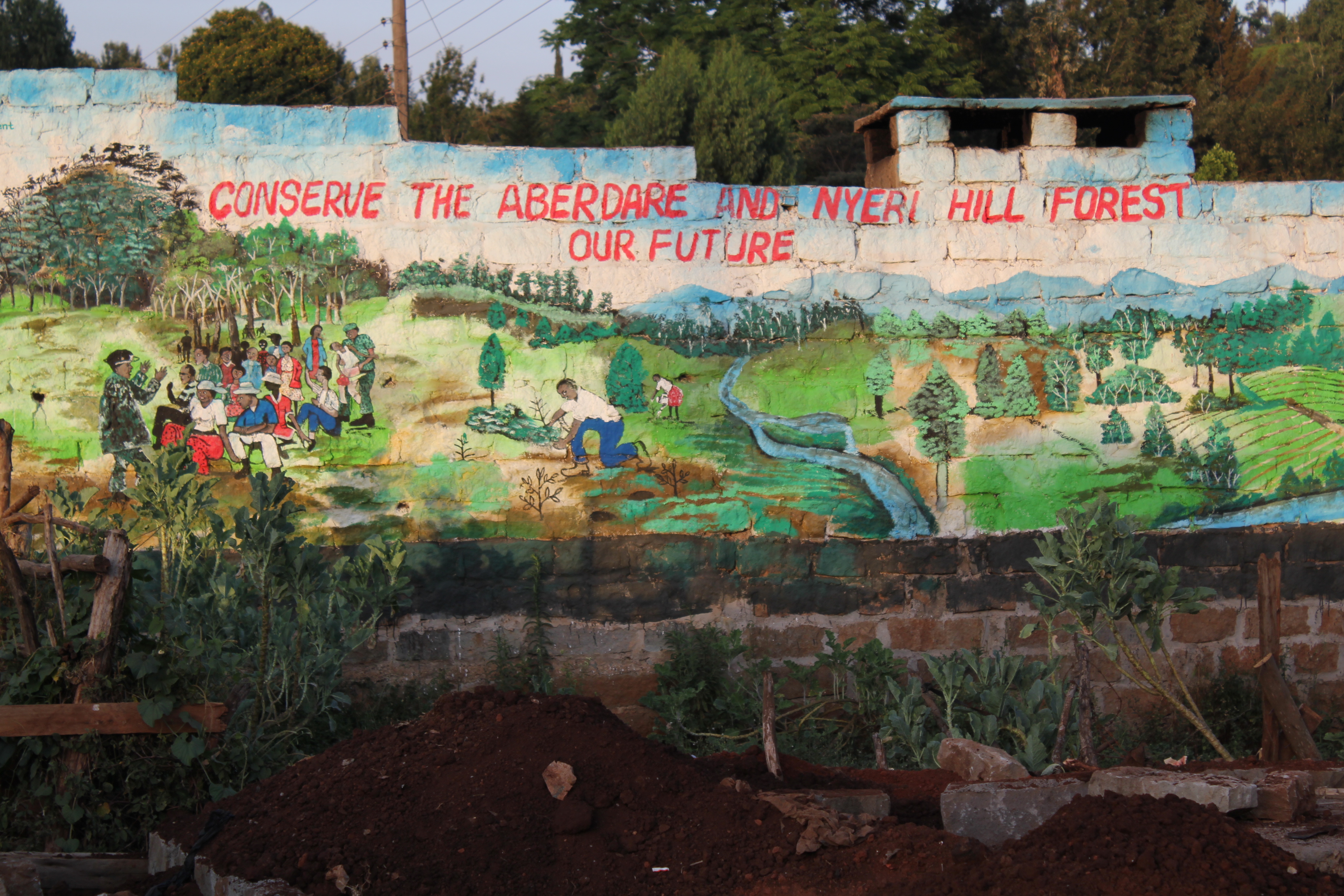
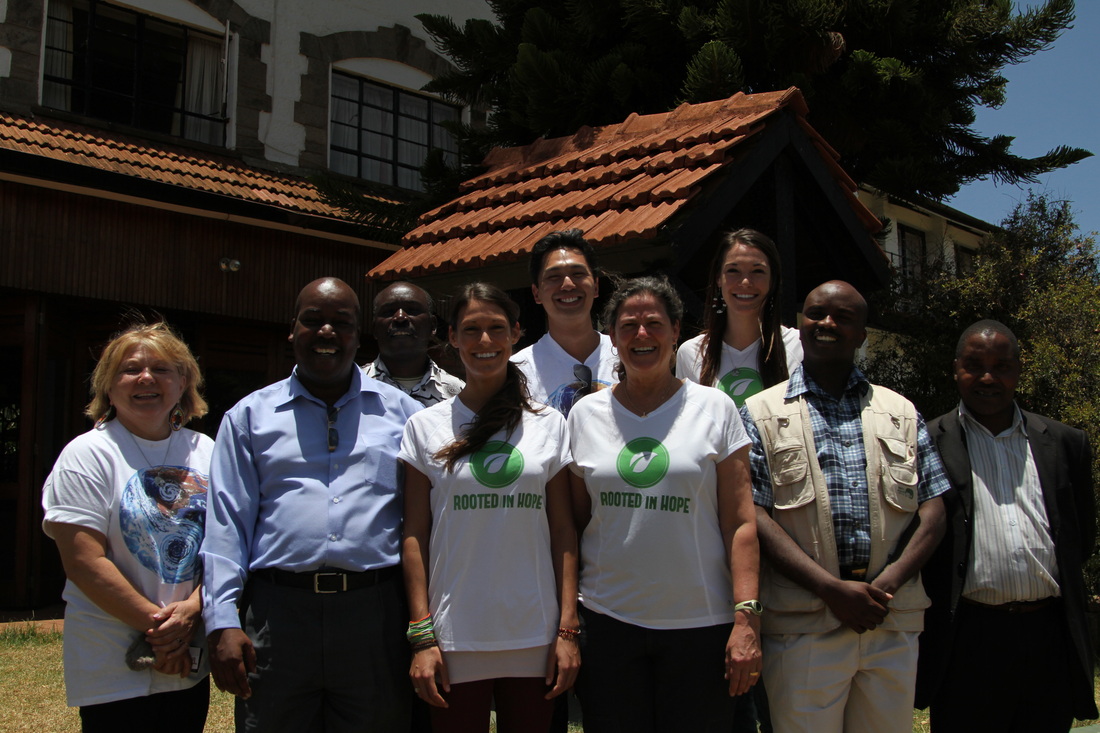
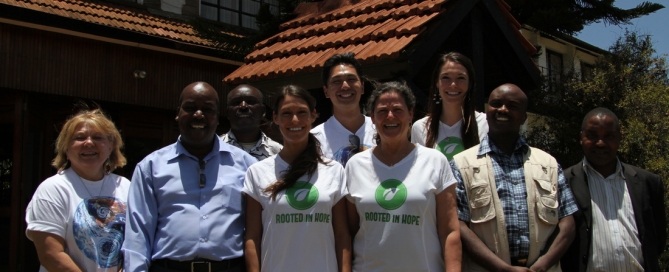
This past March, Rooted in Hope took a team of five volunteers to Kenya to commence a tree-planting project in theAberdare National Park. In collaboration with Aberdare Safari Hotels (ASH) and the Kenyan Wildlife Service (KWS), Rooted in Hope is working to advance the Return the Bush Initiative and rehabilitate the indigenous forests of Kenya. This initiative, which was started in 2007,  aims to reforest 125 hectares of degraded land in the Aberdare National Park. For the 2012 year, Rooted in Hope has committed to planting 5,000 trees in two tree-planting phases. In March, the Rooted in Hope team, with the help of ASH, KWS and local volunteers, successfully planted 2,500 trees. To date, Aberdare Safari Hotels and the Kenyan Wildlife Service have reforested 16 hectares of the 125 hectares. By the end of 2012, Rooted in Hope will have reforested an additional 5 hectares of the Aberdare National Park! A special thanks to all our donors and partner organizations for helping us reach our goal! Follow the Links below for more information:  Aberdare National Park: http://www.kws.org/parks/parks_reserves/ABNP.html Return the Bush Initiative: http://www.brand2d.com/Aberdares/?p=378) Post by Jenny Emick

By | August 6th, 2012|General|0 Comments